
Average Age of Financial Advisors


Updated:
Open Access
The average age of a financial advisor in the United States is about 44. Over 60% of financial advisors are 40 or older. Most financial advisors fall within the mid-40s age range.
In 2024, there were about 326,000 financial advisor jobs in the U.S., reflecting strong demand for financial planning services and client relationship management.

Key Insights
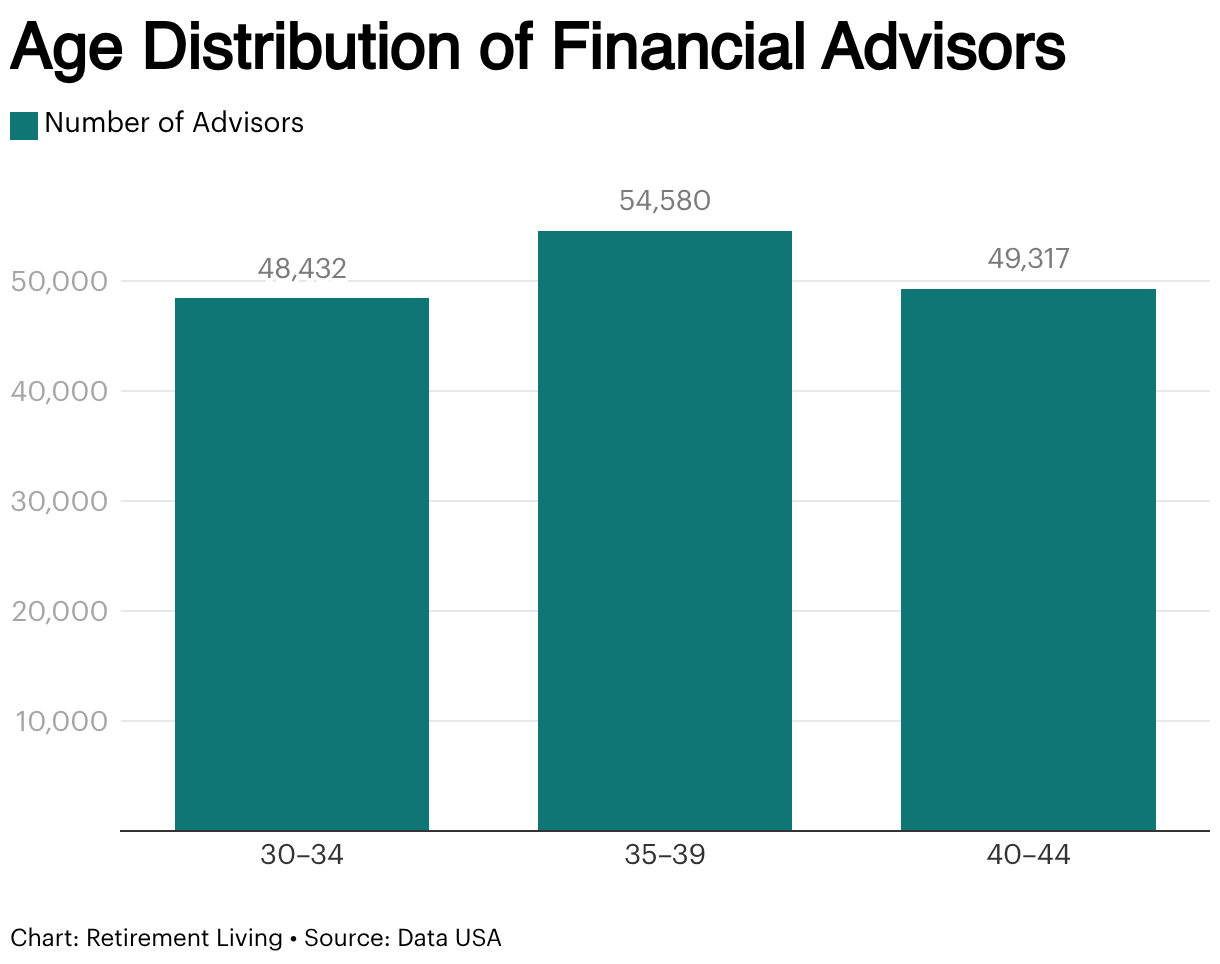
Financial planners aged 30 to 44 account for 36.7% of the workforce, underscoring a strong concentration in mid-career roles.
↓ Jump to insight
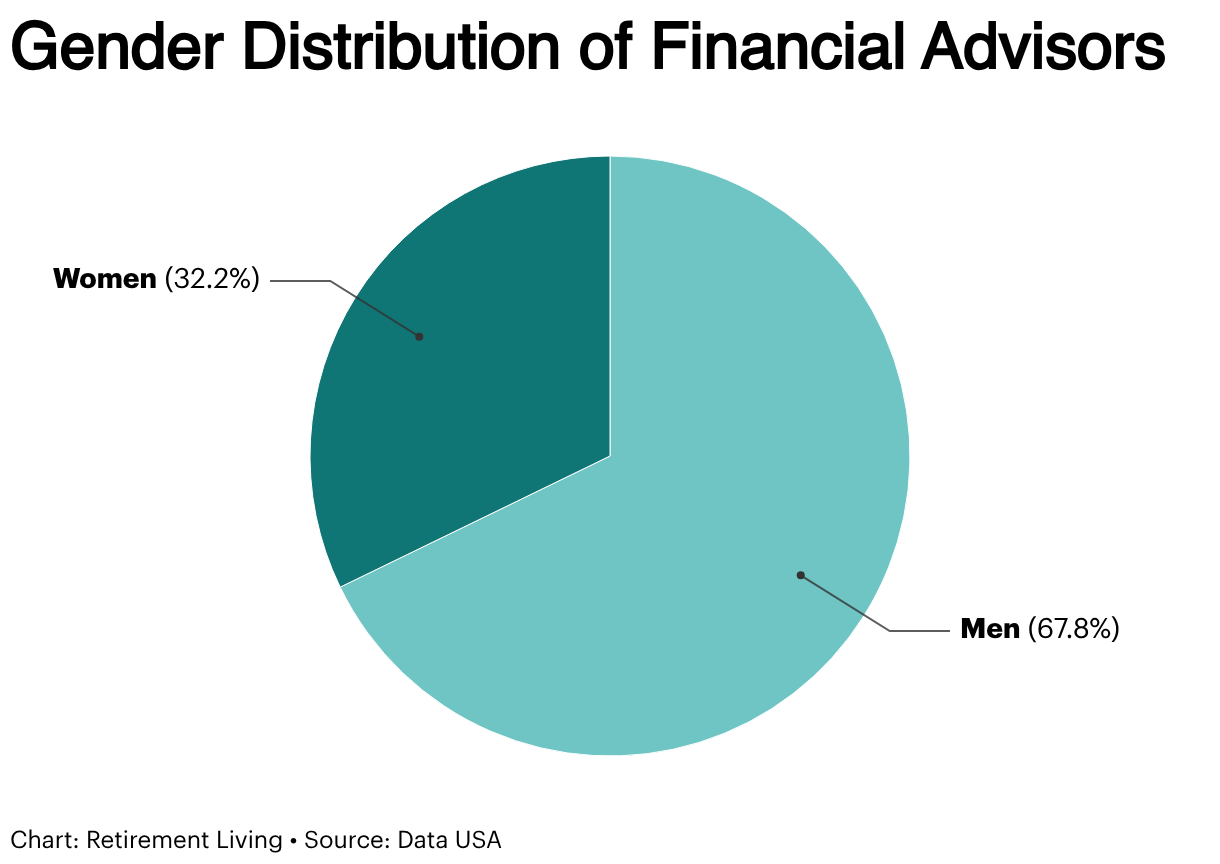
About 67.8% of financial advisors are men and 32.2% are women, while 77.5% are White and 6.54% are Black, showing both gender and racial imbalance in the workforce.
↓ Jump to insight
Female financial advisors earn about 84% of male advisor income, with average salaries of $53,971 for women and $64,280 for men.
↓ Jump to insight
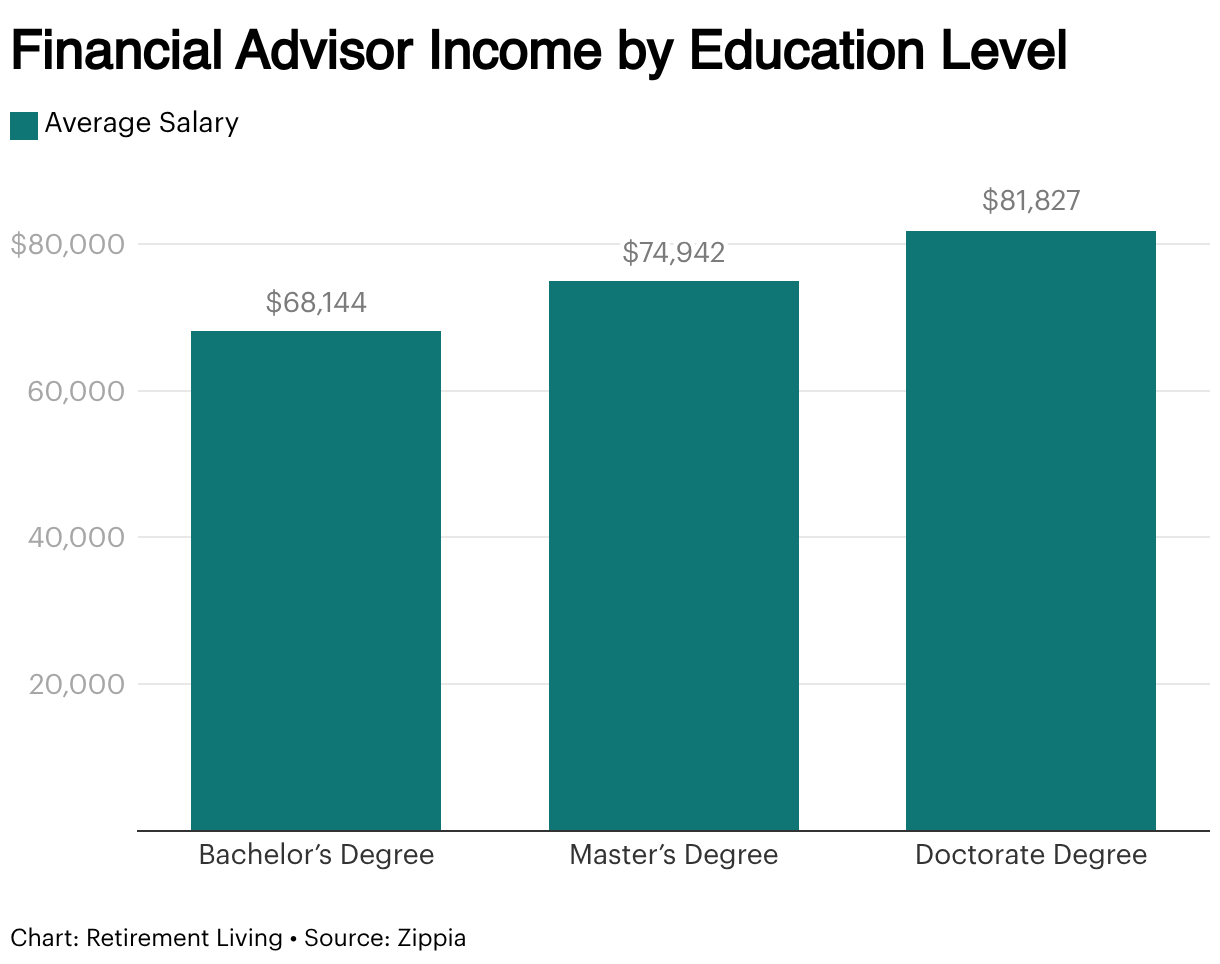
Financial advisors with higher education earn more, with doctorate holders earning $81,827, compared to $74,942 for master’s and $68,144 for bachelor’s degrees.
↓ Jump to insight
The financial advisory industry continues to grow, with 326,000 jobs and 10% projected growth through 2034, while 98% of advisors say AI is transforming financial advice and 99% expect it to shape the future.
↓ Jump to insight
Age Distribution of Financial Advisors
The largest age groups of financial advisors are 35 to 39, 40 to 44, and 30 to 34. Together, they make up 36.7% of the total workforce. The remaining workforce is spread across both younger and older age groups.
Demographics of Financial Advisors
The financial advisor workforce includes about 414,985 people in the United States. About 67.8% are men and 32.2% are women.
About 90.5% of advisors are non-Hispanic, while 9.55% are Hispanic. Among Hispanic advisors, 40.9% are Mexican, 12.9% are Puerto Rican, and 8.26% are Cuban.

About 77.5% of financial advisors are White, while about 6.54% are Black. These two groups make up a large share of the financial advisor workforce.

Financial Advisor Salaries and Gender Pay Gap
Women financial advisors earn about 84 cents for every dollar earned by male financial advisors. This reflects a pay gap within the financial advisor workforce.

Education Levels of Financial Advisors
Most financial advisors hold a bachelor’s degree, which accounts for 74% of the workforce. About 12% have a master’s degree, while 8% hold an associate’s degree. Only 3% have a high school diploma, and another 3% follow other education paths.
The Growing Demand for Financial Advisors
The United States has about 326,000 financial advisor jobs, and employment will grow 10% through 2034, adding about 24,100 roles each year.
Demand continues to rise as retirees need help with income planning, Social Security, and estate planning, while also considering the cost of a financial advisor. High-net-worth households also seek support for investment management and wealth transfer, while baby boomers drive demand as they enter retirement and the next generation begins seeking financial guidance.
SEC-registered investment advisers managed $144.6 trillion in assets in 2024, a 12.6% increase from the previous year. The U.S. financial services market will reach $146.8 billion by 2032, showing continued growth in the wealth management industry.
You face more complex financial decisions today across financial planning, taxes, and estate planning. Clients expect one financial advisor to handle multiple needs, supported by digital tools, flexible communication, and a clear succession plan for long-term support. Longer lifespans and large wealth transfers will continue to increase demand for financial advisors across all client segments.
Financial Advisor Services and What They Cover
A financial advisor provides financial advice and financial guidance across key areas of your financial life. Most certified financial planners (CFPs) focus on financial planning, which includes setting financial goals and building a long-term plan.
Here are the main services financial advisors provide.
- Investment management: Advisors manage portfolios, allocate assets, and adjust strategies in response to market changes and client needs.
- Retirement planning: Advisors help you build a retirement plan, manage income, and plan for Social Security to protect your financial future.
- Estate planning: About 70% of clients expect financial advisors to offer estate planning as part of financial planning.
- Insurance planning: This includes life insurance and annuities to manage risk and protect income.
Client expectations continue to change. Clients now expect a single financial advisor to handle investment management, estate planning, and retirement planning within a single financial plan.
The Changing Wealth Management Industry
SEC-registered investment advisers managed $144.6 trillion in assets under management in 2024. Technology now drives how financial advisors deliver services. Firms use digital tools to manage portfolios, track client data, and support financial decisions.
Hybrid advice models combine human advisors with digital platforms. Clients expect real-time access, clear updates, and flexible communication.
Artificial intelligence now plays a central role in financial advisory services. About 98% of financial advisors say AI is transforming how they deliver financial advice. About 99% believe AI will play a role in the future of financial planning.
AI helps financial advisors analyze client data, identify trends, and support investment management decisions. It also supports client communication by providing timely insights and updates.
The wealth management industry continues to shift toward data-driven financial guidance. Firms that adopt AI and digital tools can better support changing client expectations.
Bottom Line
About 27% of Americans work with a financial advisor, while 73% do not. Usage remains low among younger generations, with only 28% of Gen Z and 29% of millennials using advisory services.
Access depends on income. Only 10% of people earning under $25,000 work with a financial advisor, compared to 69% of those earning over $1 million.
At the same time, demand for financial planning continues to grow, especially as more people face complex financial decisions. However, many younger, lower-income, and underrepresented groups still lack access to fiduciary financial guidance.
Client expectations also continue to change. About 70% of clients expect estate planning to be part of financial planning, which broadens the scope of financial advisory services.
The average age of financial advisers remains high, while fewer younger advisors enter the profession. This creates a gap between rising demand and available advisory services as fewer new advisors enter the financial advisory industry.
Fair Use Statement
If you have practical insight or experience related to financial advisors, financial planning, or wealth management, you may share it with us at [email protected]. Any personal information shared will remain confidential.
Sources
- Advisor360° – 2025 Connected Wealth Report (Evaluated 26 March 2026)
Link Here - Trust & Will – 2025 Annual Financial Advisor Report (Evaluated 26 March 2026)
Link Here - Data USA – Personal Financial Advisors (Evaluated 26 March 2026)
Link Here - Zippia – Finance Advisor Demographics and Statistics in the U.S. (Evaluated 26 March 2026)
Link Here - Accenture – AI in Wealth Management (Evaluated 26 March 2026)
Link Here - FE fundinfo – Adviser Survey (Evaluated 26 March 2026)
Link Here